
Why we implemented a track for our horses
If you own an "easy keeper," you know the struggle. You look at them, they look at a blade of grass, and suddenly their girth is three holes tighter. It’s the equine equivalent of the "air-fern" lifestyle, and for many horse owners, the solution feels like a choice between two evils: let them graze themselves into a metabolic crisis, or banish them to the "Dust Bowl": also known as the dry lot.
We’ve all seen the dry lot. It’s that small, rectangular patch of dirt where horses stand around, staring longingly at the green grass on the other side of the fence. At Harmony Oaks Farm, we believe there’s more than one way. We’re all about harmony: not just with our horses, but with the land they live on. That’s why we’ve started building a track to think outside of the "box". It’s a way to manage weight naturally through movement, communal living, and regenerative grazing.
Let’s dive into why movement is the best medicine and how you can stop the "dry lot blues" for good.
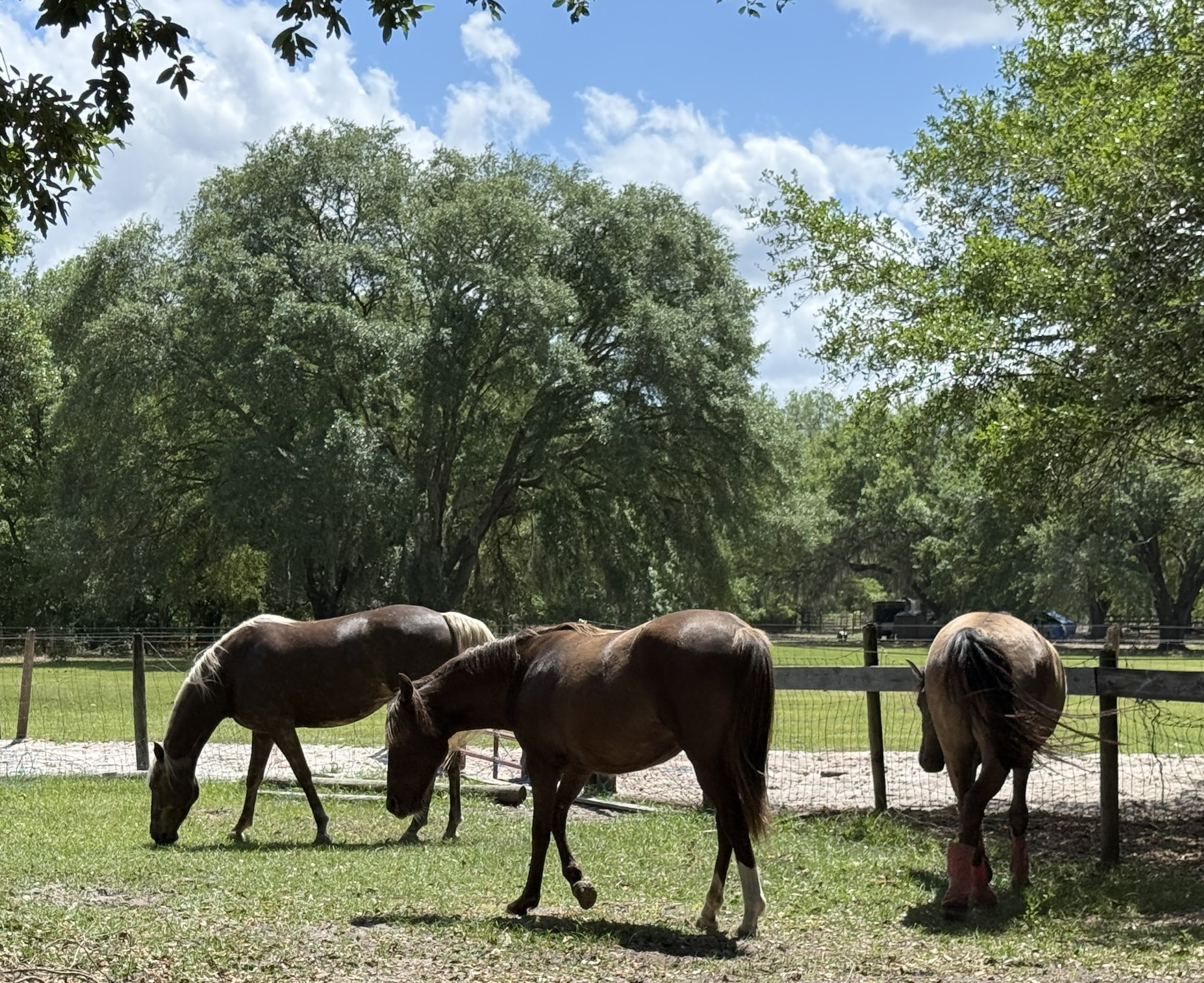
Horses grazing
The Dry Lot Dilemma
Don’t get me wrong; dry lots have their place, we still have some areas that are dry lots. Dry lots can be beneficial If you have a horse in an acute laminitis flare, a controlled, grass-free environment is a literal lifesaver. But for the average chunky pony or metabolic senior, a tiny dry lot can be a psychological and physical drag.
Horses are designed to move. In the wild, they don’t stand in one spot for sixteen hours a day eating hay out of a net. They wander. They socialized. They cover miles of varied terrain to find water, salt, and better grass. When we put them in a small dry lot, we take away that "movement for resources" drive.
The result? They stand still. Their joints get stiff, their hooves lose that natural pumping action that aids circulation, and they get cranky. Boredom leads to wood-chewing, fence-pacing, and a general lack of that "spark" we love to see in our equine partners.
Enter the Track System: The "Equine Mall Walk"
So, how do we keep the calories low but the movement high? We use a track system.
Think of it as a giant, winding corridor that loops around the perimeter of your pasture. Instead of giving the horses access to a big square of grass, you fence off the center and leave a path (a "track") around the edge.
Many horse keepers in Europe have track systems where they are able to successfully manage more horses in a small property effectively. By strategically placing their "necessities": water at one end, hay at the other, salt somewhere in the middle, and shade under our glorious Florida oaks: you force the horse to actually commute to live. It’s like a mall walk, but with more manure and better scenery.
Why the Track Wins for Weight Loss:
Passive Exercise: They move way more than they would in a paddock or dry lot without you even having to saddle up.
Varied Terrain: You can add gravel, sand, or wood chips to different parts of the track to help toughen up hooves and stimulate different muscles.
Social Spark: Living in a herd on a track encourages play and natural interaction, which burns even more calories.
Resource Separation: Healthier and Happier
The key to a successful track system is making sure your horse doesn't just find a "favorite spot" and stay there. At Harmony Oaks, we use the natural layout of our ten wooded acres to our advantage.
If the water trough is right next to the hay feeder, your horse has zero reason to move. But if they have to walk 200 yards through a winding path under the oak canopy to get a drink after they’ve had their hay? Now we’re talking.
This separation mimics the natural lifestyle of a horse. It keeps their metabolism firing and their mind engaged. They spend their day exploring the track, checking in with their buddies, and moving their feet: which is exactly what nature intended. I can see the difference in the horse’s expression, how they walk and move -it’s like they have discovered a sense of purpose to seek their resources and sense of community
Regenerative Grazing: Healing the Horse and the Land
One of the biggest perks of a track system is what happens inside the loop. By keeping the horses on the track, you protect the interior pasture from being overgrazed and compacted. Much of our property is covered by oak trees, grass doesn’t grow well in the shade. W have smaller pastures that do have grass but if we allow free for all grazing, the horses will munch it down to sand and weeds in no time.
This is where regenerative grazing comes in. Instead of having a "scuffed-up" field where the grass never gets a chance to recover, we use the interior for controlled grazing.
When the grass in a specific section is growing well, we open a gate from the track and let the horses in for a short, controlled period. This mimics "mob grazing": intense impact followed by a long period of rest. This keeps the soil healthy, encourages deep root growth, and ensures that when the horses do get grass, it’s higher quality forage rather than stressed, high-sugar "starvation" grass.
We have plans to continue to develop the track further, adding more sections for exercise and other horse safe seeds to the grass pastures to increase yield and diversity.
The Connection Between Land Health and Horse Health
We’ve found that when you focus on stewardship: taking care of the trees, the soil, and the wildlife: the horses thrive. A healthy, balanced ecosystem produces healthier horses.
When horses live on a track, their manure is distributed along a path rather than concentrated in one "poop corner" of a small stall or lot. This makes it easier to manage and, in some cases, can even help fertilize the perimeter if managed correctly. We use our chickens and ducks to clear the pastures and tracks of bugs and parasites. Chickens are really useful in catching up the manure and building the soil.
More importantly, the psychological peace of living in harmony with nature: not dominated by it: cannot be overstated. A horse that can see the grass growing, smell the changes in the air, and move freely under a canopy of oaks is a horse that is mentally "sound." A sound mind is the first step to a sound gait.
Communal Living: Because No Horse is an Island
Weight management isn't just about calories; it’s about stress. A stressed horse produces cortisol, and cortisol is a nightmare for metabolic health (hello, fatty neck and insulin resistance!).
Dry lots often isolate horses or cram them into tight spaces where they can’t escape a pushy herd mate. A track system provides length. If a horse wants some space, they can just walk further down the track.
This communal living setup at Harmony Oaks Farm ensures that our horses stay socially satisfied. They groom each other, they nap together in the shade, and they "patrol" the track as a unit. This lowered stress level makes weight management much easier because their bodies aren't constantly in "survival mode."
How to Start Your Own Track (Even on a Budget)
You don’t need ten acres and a professional crew to start moving away from the dry lot. You can start small!
The "Fence-In-A-Fence" Method: Simply run a line of electric tape 15-20 feet inside your existing fence line. Boom: you have a track.
Separate the Essentials: If you want to start small, like we did, just put water at the furthest possible point from your hay. Those basic things will get the horses moving, increasing steps during the day.
Use Slow Feeders: You can hang hay nets or use slow-feeder tubs at various stations along your track. This keeps them moving from "station to station" for small snacks rather than gorging in one spot. We have hay huts, so it is in one spot, but we do use hay nets to promote slower eating, for more time throughout the day.
Observe and Adjust: Watch how your horses use the space. If they’re making a "dead end," find a way to loop it. Movement is the goal!
The Harmony Oaks Way
At Harmony Oaks Farm, we’re committed to a different kind of horsemanship. Whether we’re focusing on gaited horse education or ecological stewardship, the goal is always the same: Harmony.
Managing your horse’s weight shouldn’t be a battle of wills or a sentence to a dusty prison. By using a movement-based track system and regenerative grazing practices, you can have a horse that is fit, fabulous, and: most importantly: happy.
So, take down those "boring box" fences and start thinking in circles (or loops!). Your horse: and their waistline: will thank you.
Some suggested Resources:
Book: Paddock Paradise: A Guide to Natural Horse Boarding by Jaime Jackson
https://www.facebook.com/groups/808480805889892 Horse Track System, Facebook Group
Harmony From Within: Understanding Horse Allergies and the Skin-Gut Connection
If you’ve ever watched your horse rub their mane out against a fence post or seen them frantically pacing to escape a cloud of midges, you know how heartbreaking allergies can be. At Harmony Oaks Farm, we believe that true health isn’t just about what you see on the outside: it’s about the "harmony from within."
For a long time, the horse world looked at skin allergies like Summer Eczema (IBH) as just a skin problem. But recent science, especially some fascinating studies on Icelandic horses, is showing us that the skin is just one part of a much bigger system. To really help our horses, we have to look at the connection between the skin, the gut, and even the lungs. It’s all about the barriers.
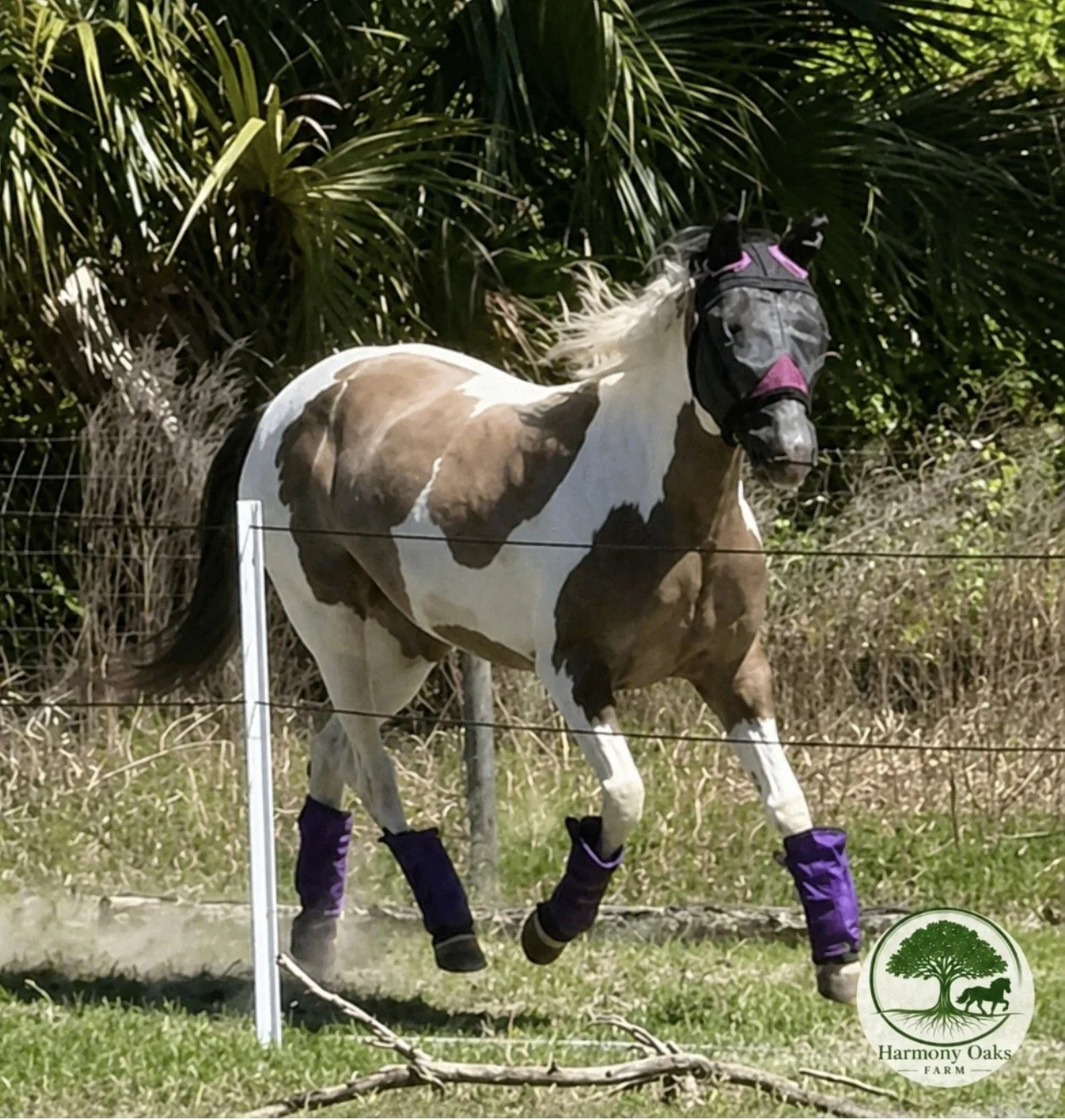
Spotted Mountain horse running on a track wearing a fly mask and fly boots
The Three Great Barriers: Skin, Gut, and Lung
Think of your horse’s body like a castle. To keep the "bad guys" (like allergens, bacteria, and toxins) out, the castle needs strong walls. In your horse, those walls are the skin, the gut lining, and the respiratory system.
According to the latest research, all three of these organs work using the same four-layer defense system:
1. The Physical Barrier: This is the actual "wall." In the skin, it’s tightly packed cells. In the lungs, it’s tiny hairs called cilia. In the gut, it’s the lining that keeps food moving along. The skin has an acidic pH (around 5.5) that kills off bad bacteria. The gut has acid and special antimicrobial peptides.
2. The Microbial Barrier: These are the trillions of tiny microbes (the microbiome) that live on the skin and in the gut. When these are healthy and diverse, there’s no room for the bad guys to move in.
3. The Immune Barrier: These are the local immune cells that live right in the tissue.
When one of these barriers breaks down, we call it "leaky." A leaky gut or a leaky skin barrier lets things inside that shouldn't be there, and that’s when the immune system goes into overdrive.
In the study of Icelandic horses a tolerance window was identified. It suggests that the age of the imported horse matters. This could translate to any other horses and their age at transition to a new environment and the stressors in that environment.
Iceland doesn't have the specific midges (*Culicoides*) that cause Summer Eczema, horses born there don't encounter the allergen until they are exported. The research shows there is a "Tolerance Window" early in life: usually in the first two years. If a horse encounters these bugs while they are young, their immune system learns that they aren't a threat. They build "tolerance."
Here is the data that really makes you stop and think:
Icelandic horses that encounter midges before age 2 have about a *20% risk** of developing IBH (the same as any other breed).However, horses imported as adults face a much higher climb. A horse imported at age 10 or older has up to a *96% risk** of developing Summer Eczema.
This tells us that the early years are vital for setting the immune system's "mindset."
If you are saying, that’s nice to know but my horse is older than that, what can I do for my horse?
The Skin Health Triangle: Lipids, Moisture, and pH
When we talk about the skin barrier, we have to look at the "Skin Health Triangle." To keep the barrier strong and "un-leaky," three things must stay in balance:
1. Lipids (Fats): These act like the mortar between the bricks of the skin cells.
2. Natural Moisturizing Factors (NMF): These keep the skin supple.
3. The pH Balance: Healthy horse skin should be slightly acidic (pH 5.5).
If your horse has dry, scaly skin or dandruff in their mane and tail, consider that a "warning light" on the dashboard. It means the triangle is out of balance. Dry skin is leaky skin. When the skin is dry, the pH rises, the "good" microbes leave, and "bad" guys like Staphylococcus aureus move in. These bad microbes can actually "reprogram" your horse's immune system to be more allergic.
The Atopic March: From Skin to Lungs
One of the scariest things discovered in recent studies is something called the "Atopic March." This is the idea that once a horse has one allergy, they are much more likely to get another.
For example, a horse with Summer Eczema has a significantly higher risk of developing Equine Asthma later in life. This happens because the immune cells that get "angry" in the skin can actually travel back to the bone marrow and tell the body to stay in an "allergic mindset."
This is why we can't just ignore a "little bit of itching." By protecting the skin barrier today, you are actually protecting your horse’s lungs and heart for the future.
Stewardship in Practice: How We Manage at Harmony Oaks
At Harmony Oaks Farm, we focus on stewardship that works with the horse’s natural biology. We don’t just want to treat symptoms; we want to support the barriers.
Using the Track System
We are big believers in the track system. Unlike a traditional small stall or a square paddock, a track system encourages constant, natural movement. This movement is essential for gut health. A moving horse has a moving gut, which helps maintain a healthy microbiome. The more diverse the environment the horse interacts with on the track, the more diverse their internal "good soldiers" become.
Diet and Supplements
For our horses showing signs of sensitivity, we pay close attention to minerals. The study highlighted that many imported horses are low in minerals. Minerals like copper and zinc are the building blocks of a healthy immune system and a strong skin barrier. Supplementing with bioavalialble minerals appropriate for the horse’s profile can make a world of difference.
We also watch the Omega-3 to Omega-6 ratio. Most modern horse diets are way too high in Omega-6 (which can be pro-inflammatory). Adding Omega-3s, like ground flax through quality sources helps keep those skin lipids healthy.
Practical Tips for Allergy Season
If you have a sensitive horse, here are some simple, science-backed steps you can take:
Be a Fan of Fans: Midges are terrible flyers. Putting high-powered fans in stalls or run-in sheds creates a "no-fly zone" that midges hate. Please be sure your fans are safe for the barn and are rated for outdoors and have a closed housing.
Consider fly sheets, fly masks, fly boots or bug blankets like Snuggy Hoods to protect the horses skin barrier, preventing bites
Wash the Blankets: If you use fly sheets, wash them regularly! Dust and skin cells trapped in the fabric can attract "house dust mites," which add another layer of irritation to an already itchy horse.
Targeted Skincare: If the skin is dry and scaly, don't just reach for a harsh medicated shampoo that might strip the natural oils. Look for ingredients like Urea, Glycerol, and Dexpanthenol. These help restore the moisture and the lipid barrier. We use products like Coat Defense or Hilton Herbs By Bye Itch
One of the biggest things that helped our herd was removing the inflammatory ingredients from the horses diet, transitioning to forage based diets, testing and supplementing with appropriate minerals to make the gut barrier strong
Use of fly traps (those cheesy plastic bags) and predator flies to cut down on environmental biting bugs that anger the horse’s systemic response
Natural fly sprays that aren’t hard on the horse’s skin but provide some shield for the horse
The Harmony Mindset
Caring for an allergic horse can feel like an uphill battle, but remember that you are your horse's best advocate. By moving away from "fixing the itch" and moving toward "supporting the barrier," you are giving your horse a much better quality of life.
Whether it’s through setting up a track system to encourage natural movement or being diligent about skincare before the scratching starts, every little bit of stewardship counts.
We are constantly learning more about how these incredible animals work. By focusing on the gut, the skin, and a low-stress lifestyle, we can help our horses find their own "harmony from within."
If you have questions about how we manage our horses or want to chat more about horse nutrition, feel free to reach out. We’re all in this journey together!
Why Forage-First Feeding Will Change the Way You Manage Your Horse
It All Begins Here

Image of chocolate mountain horse grazing
If you’ve spent much time around the horse world, you’ve probably seen the traditional feed room: rows of colorful bags filled with grain, pellets, and "sweet feeds" that smell like molasses. For a long time, we’ve been told that horses need these concentrates to perform, grow, and maintain weight.
But at Horsevana LLC, we like to look at things a little differently: through the lens of the horse’s natural design.
When we shift our focus back to a forage-first, grain-free diet, we aren't just changing what’s in the bucket. We are fundamentally changing the horse’s health, behavior, and longevity. If you’ve been feeling like your horse is "hot," struggling with mystery digestive issues, or just not blooming the way you’d like, the answer might be simpler than you think.
It’s all about the forage.
Built for the Long Haul: The Horse’s Digestive Design
To understand why forage is so transformative, we have to look at how a horse is built. Horses are "trickle feeders." In the wild, they spend 16 to 18 hours a day roaming and grazing on low-energy, high-fiber grasses.
Their digestive system isn't just a stomach; it’s a massive fermentation vat. About 60% of their digestive tract is dedicated to the hindgut (the cecum and large colon), which is specifically designed to break down fiber. When a horse eats forage, microbes in the hindgut ferment that fiber into volatile fatty acids (VFAs). These VFAs provide a steady, slow-burning source of energy that keeps the horse powered throughout the day.
When we force horses into a "meal-based" lifestyle with high-starch grains, we are essentially asking a machine built for diesel to run on high-octane racing fuel. It might work for a bit, but eventually, parts start to break.
The Problem with Grain (And Why We Skip It)
Meghan’s approach at Harmony Oaks Equine is simple: we don't use grain. While it’s the industry standard, grain introduces a host of issues that many owners spend years (and thousands of dollars) trying to "fix" with supplements or vet visits.
Starch Overload: A horse’s small intestine is relatively small. When they eat a large grain meal, the starch often doesn't get fully digested. It "spills over" into the hindgut, where it dies off the good bacteria and creates an acidic environment. This is a leading cause of hindgut acidosis and colic.
The Sugar Spike: Grains are high in sugar and starch, causing rapid spikes in blood glucose and insulin. This is a nightmare for horses with metabolic issues like EMS or those prone to laminitis.
The "Hot" Horse: Much of the "naughty" behavior we see in training: spookiness, anxiety, or excess energy: is often just a sugar high. By removing the grain, we often find a much calmer, more trainable horse underneath.
The Big Benefits of a Forage-First Lifestyle
When you transition to a holistic, forage-based program, the changes can be nothing short of miraculous. Here is why forage-first feeding will change the way you manage your horse:
1. Gastric Ulcer Prevention
Horses produce stomach acid 24/7. Unlike humans, they don't just produce it when they eat. Saliva is the only thing that buffers that acid, and horses only produce saliva when they chew.
A horse eating grain finishes their meal in 10 minutes. A horse eating forage chews for hours. By keeping forage in front of them, you ensure they are constantly producing the saliva needed to protect their stomach lining. It’s the most natural (and cheapest!) ulcer prevention on the planet.
2. Stable Energy and Better Focus
Because forage provides energy through slow fermentation rather than quick sugar spikes, your horse’s energy levels remain stable. You won't have a horse that is "fresh" one day and "dead" the next. This makes your training sessions more productive and your horse much more reliable.
3. Behavioral Wellness
Chewing is more than just eating; for a horse, it is a psychological necessity. Horses that aren't allowed to chew for most of the day often develop "vices" like cribbing, wood chewing, or weaving out of boredom and stress. Forage-first feeding satisfies that innate grazing instinct, leading to a much happier, more relaxed animal.
How to Transition to a Forage-Based Program
If you're ready to ditch the grain bag and embrace a more natural approach, here is how to get started:
Prioritize Quality Hay: Since forage is the main event, it needs to be good. Look for hay that is clean, free of mold, and harvested at the right stage for the horse's needs. Alfalfa can be a great addition for horses needing more protein or calcium, but high-quality grass hay is the foundation.
Use Slow Feeders: If your horse is a "vacuum," slow-feed hay nets are a game-changer. They mimic the natural pace of grazing and ensure the horse has something to chew on all night long without over-consuming calories.
Add a Ration Balancer or Minerals: Even the best hay can have nutritional gaps depending on the soil it was grown in. Instead of grain, we use a high-quality mineral balancer to ensure the horse gets their essential vitamins and trace minerals without the added sugars and starches.
Listen to the Horse: Every horse is an individual. Some thrive on 24/7 pasture, while others (the "easy keepers") might need their intake managed with a grazing muzzle or controlled hay portions.
Why it Matters for the "Dream Horse"
At Horsevana, we are in the business of helping people find and keep the horse of their dreams. Often, that dream is derailed by health issues or behavioral problems that stem directly from management.
When we manage horses holistically: focusing on nutrition, movement, and mental wellness: we create a horse that is sounder, saner, and ready to be a partner for years to come. Whether you are looking for equine education or looking to improve your riding, it all starts with the gut.
Final Thoughts: Keep it Simple
Equine nutrition doesn't have to be complicated. You don't need a degree in chemistry to feed your horse well. By leaning into the way horses were designed to eat, you remove the stress of "hidden" ingredients and the roller coaster of grain-based energy.
If you’re curious about how to make the switch or want to learn more about our holistic approach to equine management, breeding, and sales, we are here to help. Let’s get back to basics and let our horses be horses.