
Why we implemented a track for our horses
If you own an "easy keeper," you know the struggle. You look at them, they look at a blade of grass, and suddenly their girth is three holes tighter. It’s the equine equivalent of the "air-fern" lifestyle, and for many horse owners, the solution feels like a choice between two evils: let them graze themselves into a metabolic crisis, or banish them to the "Dust Bowl": also known as the dry lot.
We’ve all seen the dry lot. It’s that small, rectangular patch of dirt where horses stand around, staring longingly at the green grass on the other side of the fence. At Harmony Oaks Farm, we believe there’s more than one way. We’re all about harmony: not just with our horses, but with the land they live on. That’s why we’ve started building a track to think outside of the "box". It’s a way to manage weight naturally through movement, communal living, and regenerative grazing.
Let’s dive into why movement is the best medicine and how you can stop the "dry lot blues" for good.
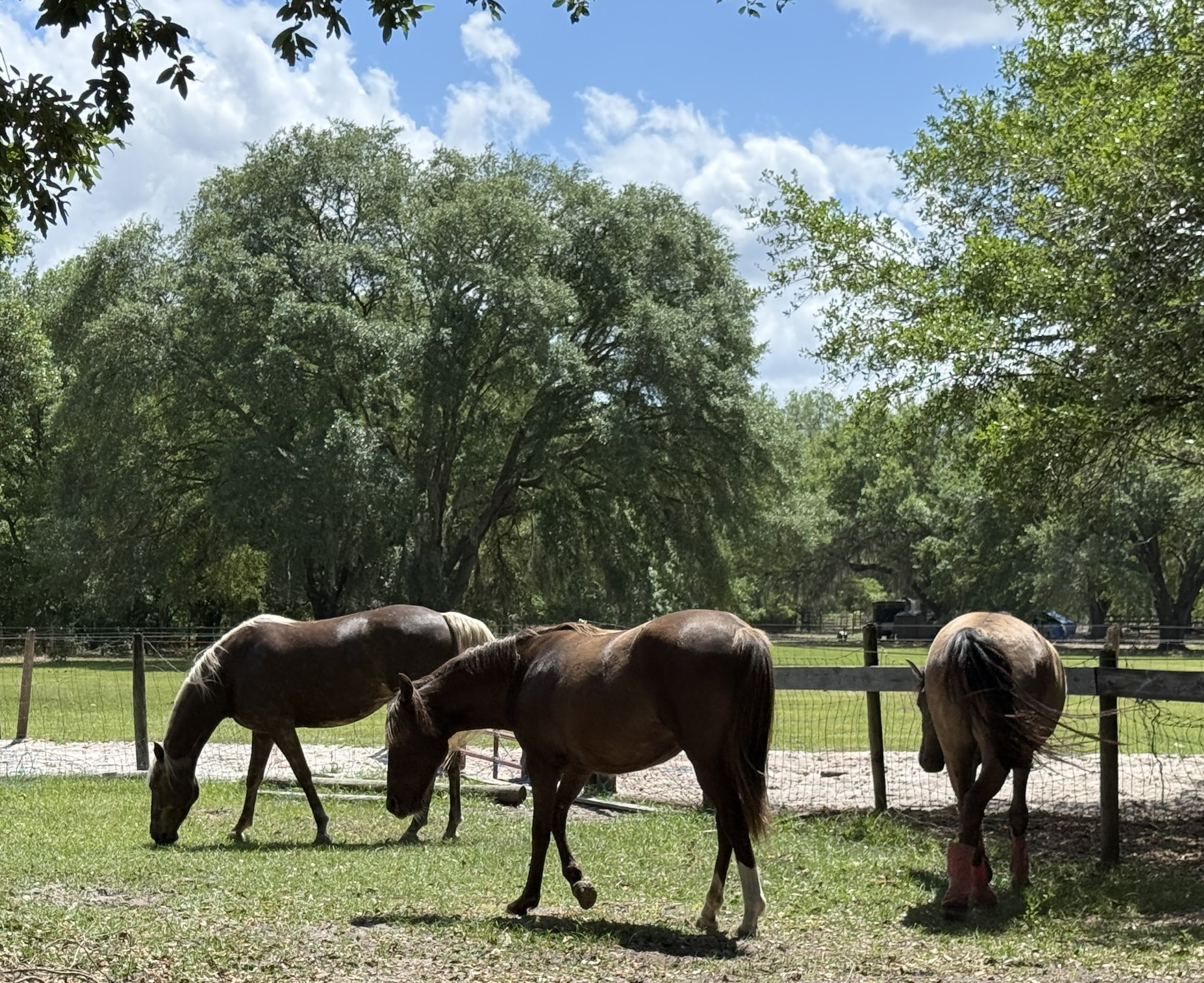
Horses grazing
The Dry Lot Dilemma
Don’t get me wrong; dry lots have their place, we still have some areas that are dry lots. Dry lots can be beneficial If you have a horse in an acute laminitis flare, a controlled, grass-free environment is a literal lifesaver. But for the average chunky pony or metabolic senior, a tiny dry lot can be a psychological and physical drag.
Horses are designed to move. In the wild, they don’t stand in one spot for sixteen hours a day eating hay out of a net. They wander. They socialized. They cover miles of varied terrain to find water, salt, and better grass. When we put them in a small dry lot, we take away that "movement for resources" drive.
The result? They stand still. Their joints get stiff, their hooves lose that natural pumping action that aids circulation, and they get cranky. Boredom leads to wood-chewing, fence-pacing, and a general lack of that "spark" we love to see in our equine partners.
Enter the Track System: The "Equine Mall Walk"
So, how do we keep the calories low but the movement high? We use a track system.
Think of it as a giant, winding corridor that loops around the perimeter of your pasture. Instead of giving the horses access to a big square of grass, you fence off the center and leave a path (a "track") around the edge.
Many horse keepers in Europe have track systems where they are able to successfully manage more horses in a small property effectively. By strategically placing their "necessities": water at one end, hay at the other, salt somewhere in the middle, and shade under our glorious Florida oaks: you force the horse to actually commute to live. It’s like a mall walk, but with more manure and better scenery.
Why the Track Wins for Weight Loss:
Passive Exercise: They move way more than they would in a paddock or dry lot without you even having to saddle up.
Varied Terrain: You can add gravel, sand, or wood chips to different parts of the track to help toughen up hooves and stimulate different muscles.
Social Spark: Living in a herd on a track encourages play and natural interaction, which burns even more calories.
Resource Separation: Healthier and Happier
The key to a successful track system is making sure your horse doesn't just find a "favorite spot" and stay there. At Harmony Oaks, we use the natural layout of our ten wooded acres to our advantage.
If the water trough is right next to the hay feeder, your horse has zero reason to move. But if they have to walk 200 yards through a winding path under the oak canopy to get a drink after they’ve had their hay? Now we’re talking.
This separation mimics the natural lifestyle of a horse. It keeps their metabolism firing and their mind engaged. They spend their day exploring the track, checking in with their buddies, and moving their feet: which is exactly what nature intended. I can see the difference in the horse’s expression, how they walk and move -it’s like they have discovered a sense of purpose to seek their resources and sense of community
Regenerative Grazing: Healing the Horse and the Land
One of the biggest perks of a track system is what happens inside the loop. By keeping the horses on the track, you protect the interior pasture from being overgrazed and compacted. Much of our property is covered by oak trees, grass doesn’t grow well in the shade. W have smaller pastures that do have grass but if we allow free for all grazing, the horses will munch it down to sand and weeds in no time.
This is where regenerative grazing comes in. Instead of having a "scuffed-up" field where the grass never gets a chance to recover, we use the interior for controlled grazing.
When the grass in a specific section is growing well, we open a gate from the track and let the horses in for a short, controlled period. This mimics "mob grazing": intense impact followed by a long period of rest. This keeps the soil healthy, encourages deep root growth, and ensures that when the horses do get grass, it’s higher quality forage rather than stressed, high-sugar "starvation" grass.
We have plans to continue to develop the track further, adding more sections for exercise and other horse safe seeds to the grass pastures to increase yield and diversity.
The Connection Between Land Health and Horse Health
We’ve found that when you focus on stewardship: taking care of the trees, the soil, and the wildlife: the horses thrive. A healthy, balanced ecosystem produces healthier horses.
When horses live on a track, their manure is distributed along a path rather than concentrated in one "poop corner" of a small stall or lot. This makes it easier to manage and, in some cases, can even help fertilize the perimeter if managed correctly. We use our chickens and ducks to clear the pastures and tracks of bugs and parasites. Chickens are really useful in catching up the manure and building the soil.
More importantly, the psychological peace of living in harmony with nature: not dominated by it: cannot be overstated. A horse that can see the grass growing, smell the changes in the air, and move freely under a canopy of oaks is a horse that is mentally "sound." A sound mind is the first step to a sound gait.
Communal Living: Because No Horse is an Island
Weight management isn't just about calories; it’s about stress. A stressed horse produces cortisol, and cortisol is a nightmare for metabolic health (hello, fatty neck and insulin resistance!).
Dry lots often isolate horses or cram them into tight spaces where they can’t escape a pushy herd mate. A track system provides length. If a horse wants some space, they can just walk further down the track.
This communal living setup at Harmony Oaks Farm ensures that our horses stay socially satisfied. They groom each other, they nap together in the shade, and they "patrol" the track as a unit. This lowered stress level makes weight management much easier because their bodies aren't constantly in "survival mode."
How to Start Your Own Track (Even on a Budget)
You don’t need ten acres and a professional crew to start moving away from the dry lot. You can start small!
The "Fence-In-A-Fence" Method: Simply run a line of electric tape 15-20 feet inside your existing fence line. Boom: you have a track.
Separate the Essentials: If you want to start small, like we did, just put water at the furthest possible point from your hay. Those basic things will get the horses moving, increasing steps during the day.
Use Slow Feeders: You can hang hay nets or use slow-feeder tubs at various stations along your track. This keeps them moving from "station to station" for small snacks rather than gorging in one spot. We have hay huts, so it is in one spot, but we do use hay nets to promote slower eating, for more time throughout the day.
Observe and Adjust: Watch how your horses use the space. If they’re making a "dead end," find a way to loop it. Movement is the goal!
The Harmony Oaks Way
At Harmony Oaks Farm, we’re committed to a different kind of horsemanship. Whether we’re focusing on gaited horse education or ecological stewardship, the goal is always the same: Harmony.
Managing your horse’s weight shouldn’t be a battle of wills or a sentence to a dusty prison. By using a movement-based track system and regenerative grazing practices, you can have a horse that is fit, fabulous, and: most importantly: happy.
So, take down those "boring box" fences and start thinking in circles (or loops!). Your horse: and their waistline: will thank you.
Some suggested Resources:
Book: Paddock Paradise: A Guide to Natural Horse Boarding by Jaime Jackson
https://www.facebook.com/groups/808480805889892 Horse Track System, Facebook Group